
Introduction
Ever faced a challenge that seemed impossible to overcome? Whether it’s a work-related hurdle or a personal roadblock, finding the right solution often requires more than conventional thinking. Creative problem-solving is the secret sauce to navigating these moments with ease, transforming obstacles into opportunities.
In this article, we’ll explore the essence of creative problem-solving, why it’s a game-changer in today’s fast-paced world, and how you can cultivate this invaluable skill. From practical techniques to inspiring real-world examples, get ready to unlock your inner problem-solving genius.
Section 1: What is Creative Problem-Solving?
Breaking Down the Concept
Creative problem-solving is a strategic approach that combines imagination, critical thinking, and innovation to generate solutions that go beyond traditional methods. Unlike linear problem-solving, it embraces curiosity, flexibility, and exploration.
Why It Matters
In a world where change is constant, the ability to think creatively is essential for adapting and thriving. Whether you’re an entrepreneur, team leader, or simply navigating life’s complexities, creative problem-solving can:
- Foster innovation.
- Improve decision-making.
- Build resilience against challenges.
Real-World Impact
Consider Airbnb. Faced with the challenge of monetizing unused space, its founders applied creative problem-solving by reimagining spare rooms as short-term rental opportunities. The result? A multi-billion-dollar company that revolutionized travel and hospitality.
Section 2: The 4 Stages of Creative Problem-Solving
Stage 1: Clarify
Before diving into solutions, it’s crucial to understand the problem fully. Ask questions like:
- What is the root cause?
- Who is affected?
- What constraints exist?
Pro Tip: Tools like the 5 Whys Technique help you drill down to the heart of the issue.
Stage 2: Ideate
Here’s where creativity shines! Use brainstorming techniques to generate a wide range of ideas. Popular methods include:
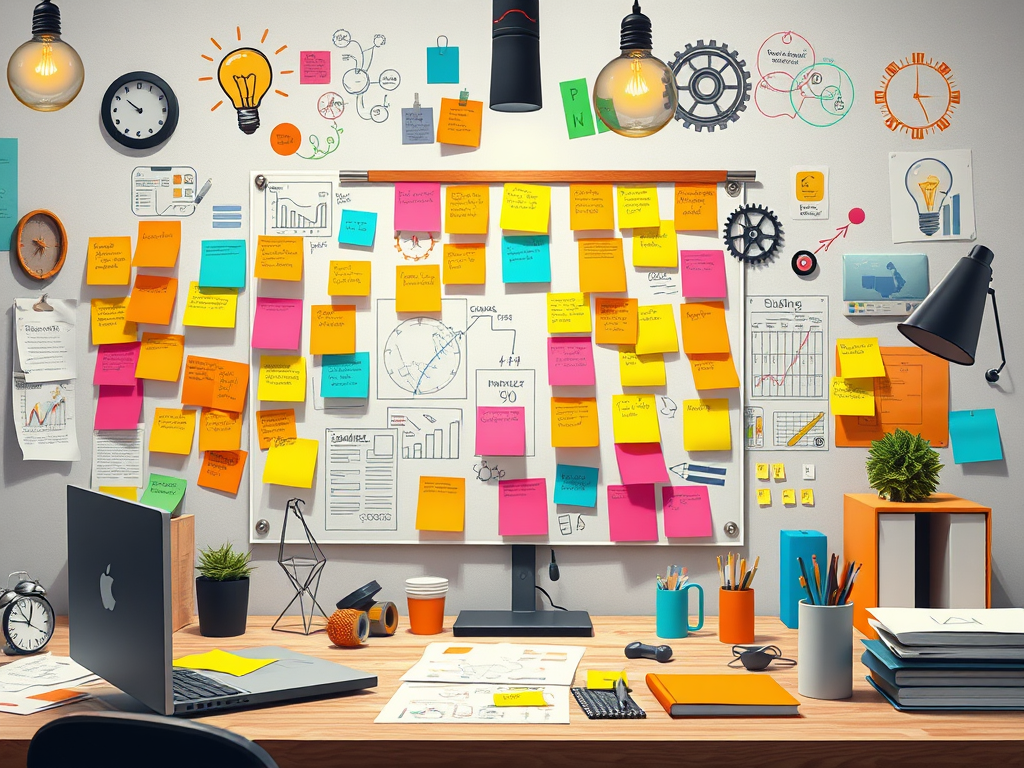
- Mind Mapping: Visualize connections between ideas.
- SCAMPER Technique: Explore possibilities by substituting, combining, or modifying existing solutions.
Stage 3: Develop
Evaluate your ideas and select the most promising ones. Use criteria such as feasibility, impact, and resources.
Stage 4: Implement
Put your chosen solution into action. Track progress, gather feedback, and adjust as needed.
Section 3: Techniques for Creative Problem-Solving
Brainstorming Sessions
Gather a group with diverse perspectives. Encourage wild ideas, defer judgment, and build upon each other’s thoughts.
Reverse Engineering
Start with the desired outcome and work backward to uncover the steps needed to achieve it.
Role-Playing
Step into the shoes of others affected by the problem. This can uncover overlooked insights and lead to more empathetic solutions.
Design Thinking
Adopt this iterative process that emphasizes empathy, prototyping, and testing. It’s a favorite among tech companies like Apple and Google.
Section 4: Overcoming Creative Blocks
Common Challenges
- Fear of Failure: Worrying about mistakes stifles innovation.
- Analysis Paralysis: Overthinking can prevent progress.
- Groupthink: A lack of diverse opinions can limit ideas.
Solutions
- Adopt a Growth Mindset: View failure as a learning opportunity.
- Set Constraints: Paradoxically, limitations can spark creativity.
- Encourage Diversity: Invite individuals with varied skills and backgrounds to collaborate.
Section 5: Real-Life Examples of Creative Problem-Solving
Example 1: LEGO Turnaround
Facing financial decline in the early 2000s, LEGO embraced open innovation. By collaborating with fans through platforms like LEGO Ideas, they developed crowd-sourced designs, rekindling global interest.
Example 2: Netflix’s Evolution
When streaming became the future of entertainment, Netflix pivoted from DVD rentals to on-demand content. This bold move cemented its position as a market leader.
Example 3: The Apollo 13 Mission
During a life-threatening space crisis, NASA engineers improvised a carbon dioxide filter using only materials on board. Their ingenuity saved the astronauts’ lives.
Conclusion
Creative problem-solving is more than a skill—it’s a mindset. By embracing curiosity, experimentation, and collaboration, you can tackle challenges with confidence and ingenuity.
As Albert Einstein once said, “We cannot solve our problems with the same thinking we used when we created them.” So why not start thinking differently today?
Ready to elevate your problem-solving game? Subscribe to our newsletter for actionable tips, tools, and inspiration delivered straight to your inbox!
Unlock the power of creativity—it’s like having a superpower you didn’t know you had.
 Luckey Signature Services